
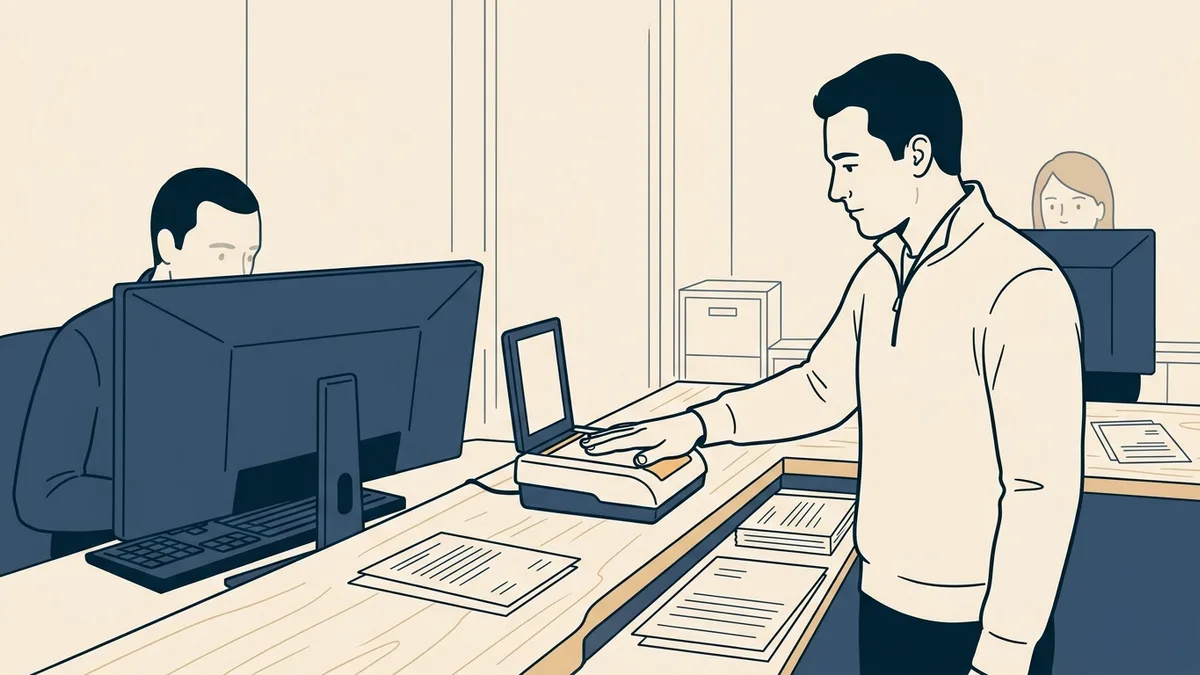
Texas, California, Florida, Georgia and Alaska fingerprint new SLP and audiology applicants, and DC requires a new background check with each application. California applicants outside the state use hard cards that take at least 8 to 12 weeks to process. A conviction does not automatically disqualify you, and compact privileges rely on an FBI check run by your home state.
Fingerprinting is the step of a license application that you control least. You cannot do it until the board tells you how, the results travel between state and federal agencies you never deal with, and a smudged card can send you back to the start. It is also increasingly universal: of the large states, Texas, California and Florida fingerprint every new SLP and audiology applicant.
Which states fingerprint SLP and audiology applicants?
Texas
TDLR requires all new applicants to submit fingerprints for a national criminal history record review. After TDLR receives your completed application, it emails instructions for booking a fingerprint appointment. If you already submitted fingerprints for a Texas SLP assistant or intern license, you do not need to submit them again. Renewal is not exempt either: TDLR says some licensees must provide new fingerprints before renewing, emails them 90 days before expiration, and runs a criminal background check on every renewal application.
California
Every SLP and audiology applicant is fingerprinted. California residents must use Live Scan, the electronic system run through the state Department of Justice. Applicants outside California use FD-258 fingerprint hard cards, and the board warns that "the DOJ processing time for hard card fingerprints is a minimum of 8 to 12 weeks, or longer." Cards must be rolled by a law enforcement agency or a trained technician to avoid rejection. The board recommends doing Live Scan no more than 30 days before you apply, because results with no application on file are destroyed after six months.
Florida
Florida's Board of Speech-Language Pathology and Audiology says House Bill 975, passed in the 2024 session, requires electronic fingerprinting, and "your application cannot be approved until this requirement, along with all other licensure criteria, has been met." At renewal, Florida collects a $43.25 fee for the state to retain your prints if your retention is expiring that cycle.
Georgia and Alaska
Georgia requires every SLP and audiology applicant to register and provide fingerprints for a nationwide criminal background check at the applicant's expense, citing O.C.G.A. 43-44-6(a)(14) and 43-44-8(a)(6), according to an archived copy of the board's FAQ. Alaska's statute requires new applicants to be fingerprinted for state and national record checks, and exempts audiologists and SLPs who already held a valid Alaska license on July 1, 2024 (AS 08.11.017).
District of Columbia
DC Health's licensing page says all applicants must complete a new criminal background check for each application submitted, so a check run for an earlier DC application does not carry over.
Can you reuse fingerprints you already gave?
Usually only within the same agency. Texas reuses prints from your other TDLR speech and hearing licenses. California does not ask you to Live Scan again for licensure if you already did so for a registration with the board, unless that registration was canceled or expired. Prints taken for a school district, a teaching credential or another state's board were requested by a different agency, so expect to redo them. Assume a new board means new prints until it says otherwise.
How do boards weigh a criminal record?
Most boards look at the conviction, its relevance to practice and the time since, rather than treating any record as a bar. Three examples:
- Texas says a criminal conviction "does not necessarily disqualify you from licensure," and lets you ask for a criminal history evaluation before you apply and pay non-refundable fees.
- California may deny an application for a crime substantially related to the profession committed within the preceding seven years, or where the applicant was released from incarceration within seven years, under Business and Professions Code section 480; the seven-year limit does not apply to serious felonies. The board does not pre-evaluate convictions, does not ask about criminal history on the application, and may require certified court documents. It warns that processing can take longer with a conviction history.
- Florida lists disqualifying offenses on its application page with look-back periods tied to the degree of the felony, such as more than 15 years for first- or second-degree felonies and more than 10 years for third-degree felonies.
Disclosure questions on the application are a separate issue from the fingerprint results. See disclosing discipline on an SLP license application.
How does the ASLP Compact background check work?
The compact requires each member state to check applicants' criminal history using fingerprints submitted to the FBI and the state's own records agency (model law Section 3.B). A state "cannot participate in authorizing issuance of compact privileges" until it has fully implemented that check, according to the Commission's FAQ, and results "shall be reviewed solely by the member state" and not shared with the Commission. Until a member state finishes that work, it cannot issue privileges. See the FBI background check behind the ASLP Compact.
When should you start fingerprinting?
As early as the board allows. In Texas that means right after you submit the application, when the instructions arrive. For California from outside the state, it means getting hard cards rolled early and planning for two to three months of Department of Justice processing alone. If you have a record, add time for the board to request documents and review them.
Physical therapists face a similar set of rules; our sister site covers fingerprinting for PT applications.
Where do we fit into the fingerprint step?
Coordinating fingerprints is part of our License by Endorsement service ($599 per state) and Full State License Application service ($749 per state). We tell you which method the state uses, get the right forms or codes to you, track the results and flag rejected cards quickly. You attend the appointment, and vendor and agency fees are separate. See each state's rules in the state license index.
Common questions
- Do I need fingerprints for an SLP license?
- In many states, yes. Texas, California, Florida, Georgia and Alaska fingerprint new SLP and audiology applicants. Florida's board says it cannot approve an application until electronic fingerprinting is complete.
- How long do California fingerprints take from out of state?
- California's board says Department of Justice processing of hard card fingerprints takes a minimum of 8 to 12 weeks, or longer. California residents use Live Scan instead.
- Can I reuse fingerprints from my school job?
- Usually not. Prints are tied to the agency that requested them. Texas reuses prints across its own speech and hearing licenses, but a different agency generally means new prints.
- Will a criminal record stop me from getting licensed?
- Not automatically. Texas says a conviction does not necessarily disqualify you and offers an evaluation before you apply. California weighs crimes substantially related to the profession, generally within the past seven years.
Need Help with Your Application?
We handle the SLP and audiology licensing process end-to-end — eligibility screening, documents, board follow-ups, and tracking.