
An SLP or audiologist educated abroad needs a U.S. state license; ASHA says the CCC is not a permit to practice. Boards such as Texas and Pennsylvania require a credential evaluation showing an equivalent degree, most require the Praxis, and many require a supervised year in the U.S. New York's Path B accepts three years of licensed experience abroad.
Speech-language pathologists and audiologists trained abroad bring degrees, licenses and years of experience that U.S. boards will recognize, but not automatically and not all at once. Every state wants proof that your education matches its standard, most want the U.S. national exam, and many want a supervised year in the U.S. before a full license. The routes differ enough by state that the order you do things in matters.
Is ASHA certification the same as permission to practice?
No. ASHA's page for international applicants says it directly: "ASHA certification is not a permit to practice in the professions of audiology or speech-language pathology in the U.S. State licensure is a requirement for working in any state." The CCC is voluntary, and ASHA adds that holding it "does not guarantee that you will obtain state licensure," just as a license does not guarantee the CCC.
ASHA certification can still help, because many state applications accept it as proof of parts of the requirement. Internationally educated applicants apply for the CCC with transcripts and evaluations; ASHA lists $490 for certification with membership or $446 without, and asks for about 6 to 8 weeks for the first review once everything arrives. SLPs certified by an association that signed ASHA's Mutual Recognition Agreement use a separate application. See ASHA's CCC is not a state license.
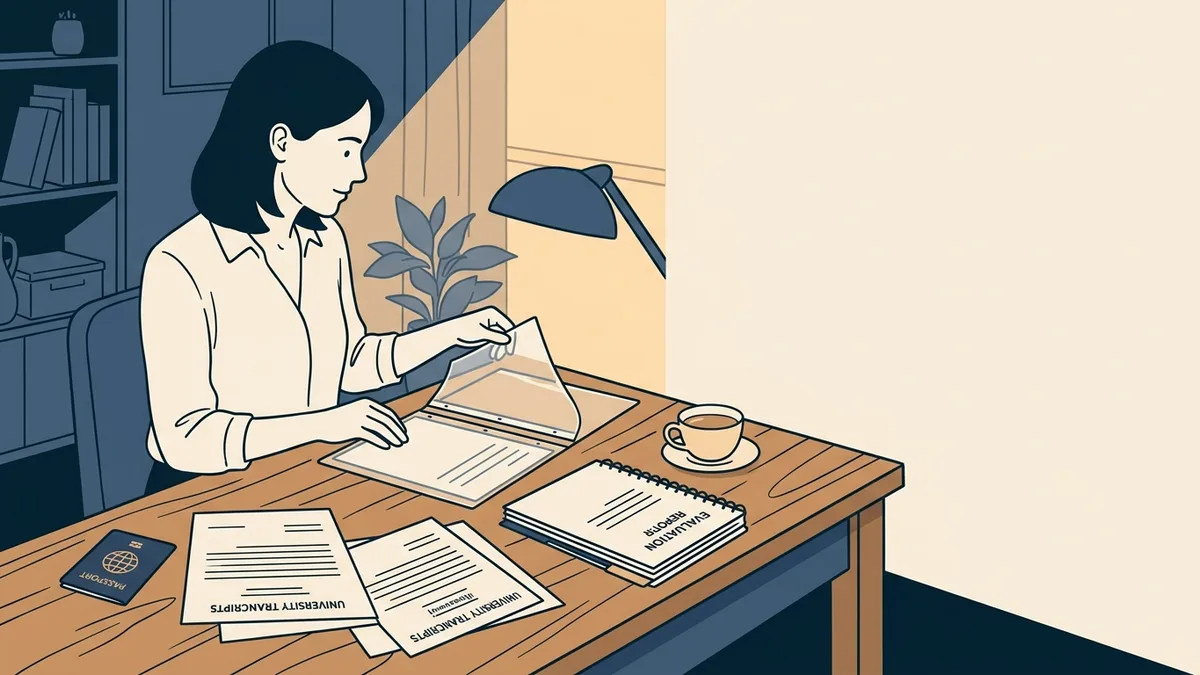
How do boards evaluate a foreign degree?
- Texas requires an evaluation from an ASHA-approved transcript evaluation service if you graduated from a foreign university or your transcript is not in English. For an SLP, the evaluation must confirm a degree equivalent to a master's or higher with a major in communicative sciences or disorders. For an audiologist, it must confirm a doctoral degree in audiology or a related hearing science, or a master's in audiology conferred on or before December 31, 2007.
- Pennsylvania accepts a credential evaluation by a recognized and accredited evaluation agency approved by the board as proof that a foreign-trained applicant's education is substantially equivalent (49 Pa. Code § 45.22).
- Florida asks an applicant from a program outside the U.S. or Canada for documentation that the program is equivalent to the standards of a U.S.-recognized accrediting body (Fla. Stat. § 468.1155).
- ASHA, for the CCC-A, requires evaluations from services recognized by the National Association of Credential Evaluation Services, with course translation into U.S. semester hours.
Ask the board which evaluators it accepts before you pay for one. An evaluation that satisfies ASHA may not use the format a state wants, and the reverse.
Do you still need the Praxis and a supervised year?
Usually, though some states offer an experience-based path.
California has a dedicated pathway for foreign-educated graduates. An SLP completes Required Professional Experience on an RPE temporary license (foreign educated) and then applies for the permanent license; audiologists have their own foreign-educated application package. The Praxis is required at 162 or above and must be no more than five years old.
Pennsylvania requires a foreign-trained SLP to have completed at least 9 months of supervised professional experience and to pass the licensure exam (§ 45.22).
New York offers Path B for someone licensed in another country. It requires an acceptable program or its equivalent, at least three years of professional experience after licensure within the six years before you apply, a passing Praxis score or a passed written licensure exam in the country where you are licensed, certification from an acceptable certifying agency such as ASHA, and good standing everywhere you are licensed. See New York licensing.
Can a foreign degree count toward an ASLP Compact privilege?
The degree can. The compact's model law accepts a degree from a program outside the U.S. if the program and institution were approved by that country's accrediting body and an independent credentials review agency has verified it as comparable. But a privilege also requires an active license in a U.S. home state that is issuing privileges, which as of October 2026 means Louisiana, West Virginia, Ohio or Tennessee, plus a valid Social Security number or National Practitioner Identifier. The compact is a second step after a state license, never a first one.
What order works best?
- Pick the state first. Its rules decide which evaluation format, exam and supervised experience you need.
- Order the credential evaluation from a service that state accepts, with translations.
- Take the Praxis and send the score to that board's code. Mind the score-age limits: five years in California.
- Apply for the supervised-practice credential if the state requires one, with a supervisor licensed there. See fellowship credentials by state.
- Apply for the full license when the experience is complete, and for the CCC in parallel if you want it.
Other professions face the same sequencing problem. Our sister sites cover licensing for foreign-educated OTs and the order of operations for internationally educated PTs.
How can we help an internationally educated clinician?
Our Full State License Application service is $749 per state and is built for exam-route and complex applications like these. We confirm the state's evaluation and exam requirements before you spend money, assemble the file, coordinate fingerprints and track the board. Where a supervised year is required, our Clinical Fellowship and Provisional License service is $349 per state. You sign and attest to every application. Evaluation, ETS, ASHA and board fees are separate.
Common questions
- Can I practice as an SLP in the U.S. with my foreign license?
- Not without a state license. ASHA says state licensure is required to work in any state and its certification is not a permit to practice. Each state reviews your education, exam and experience.
- Which credential evaluation service should I use?
- The one your target state accepts. Texas requires an ASHA-approved transcript evaluation service, Pennsylvania a board-approved agency, and ASHA's own audiology certification uses services recognized by the National Association of Credential Evaluation Services.
- Do internationally educated SLPs have to take the Praxis?
- Usually. California requires a score of at least 162 no more than five years old. New York's Path B also accepts a passed written licensure exam from the country where you are licensed.
- Can I use the ASLP Compact with a foreign degree?
- Only after you hold a license in a U.S. home state that issues privileges. The compact accepts a foreign degree verified as comparable, but it does not replace the first state license.
Need Help with Your Application?
We handle the SLP and audiology licensing process end-to-end — eligibility screening, documents, board follow-ups, and tracking.